While we get caught up with this SG50 project, we run the risk of forgetting the pre-1965 history of Singapore. The more cynical among us would even suggest that SG50 is another attempt by the powers-that-be to whitewash "non-approved" history, much like my own six-year experience with the media in Shanghai, China, where depictions of pre-civil war, pre-1945, and pre-communist history were non-existent.
It cannot be that this Singapore island was a sleepy village, even before 1819 when the British East India Company conveniently "found" it and we were, henceforth, no longer lost. Given that everyone's harping on the strategic location of this island, we should expect that, as long as naval technology exists, Singapore would be a prized location for anyone wishing to dominate the region.
A cursory glance through online archives indicates that there had been many dominant players in the history of Singapore for at least the past six centuries. How did various powers like colonial Britain, Imperial Japan, the Johore Sultanate, the Dutch East India Company, colonial Portugal, the Malacca Sultanate, and Yuan and Ming China view Singapore? Even our very own ancient name of Temasek points to an interesting time when the Srivijaya was dictating the affairs of 10th to 12th century Southeast Asia.
SG50? I think SG500 would be barely adequate for framing the history of Singapore. It is a shame for current and future generations of Singaporeans to remember this island as nothing more than a post-1965 economic miracle.
Showing posts with label History. Show all posts
Showing posts with label History. Show all posts
Monday, February 02, 2015


Saturday, June 06, 2009
65 years on...
...and let's not forget the price that men paid to keep the world free.
Not only on the beaches of Normandy...

but also in the China-Burma-India theater...
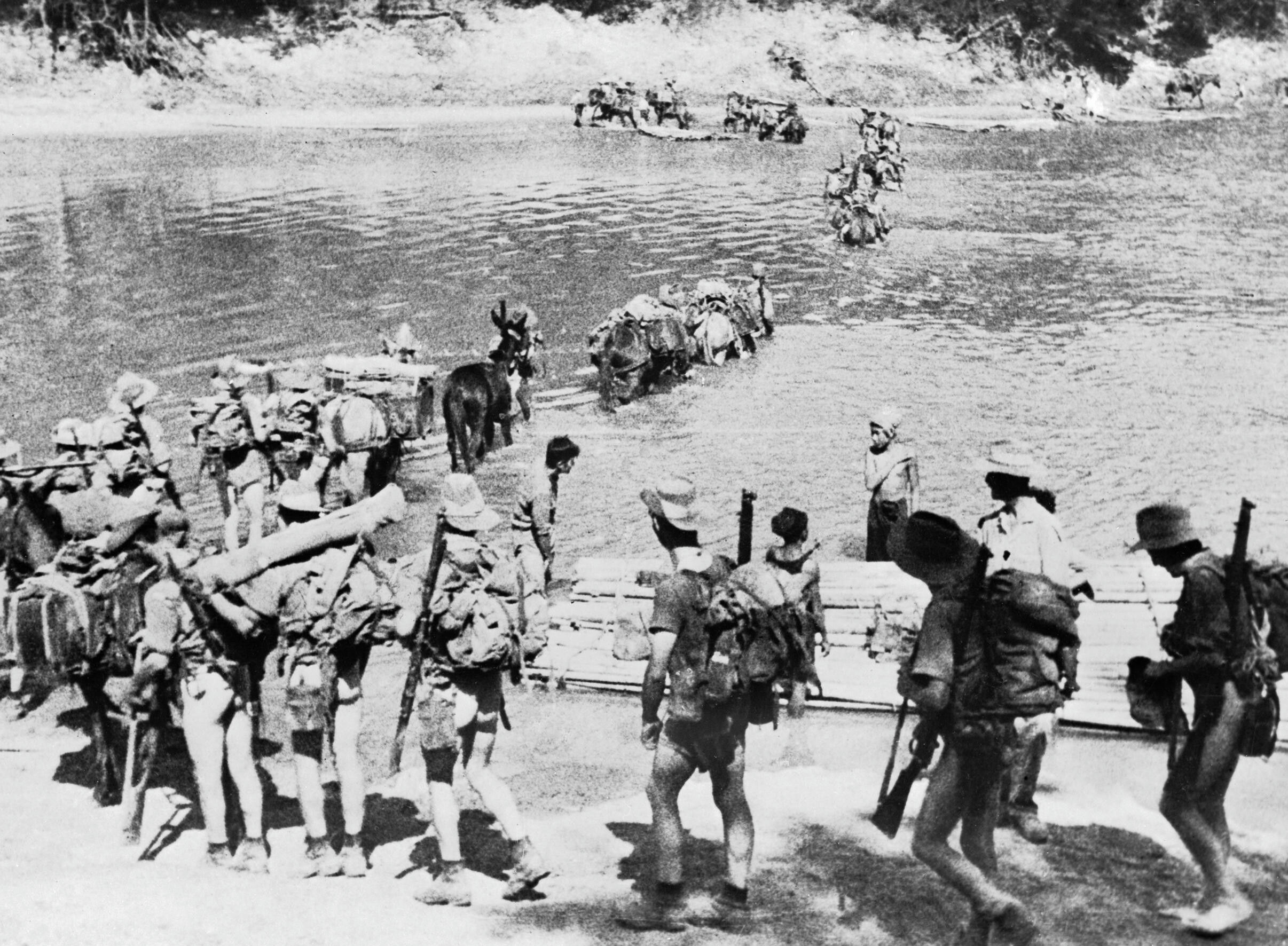
Not a very well-known piece of WW2 history was the Second Chindit Expedition, conducted from February to August 1944. The expedition originated from Assam state in north-east India into Burma. Consisting of troops mainly from the 77th Indian Infantry Brigade. Their main mission was to wrest control of north Burma from the hands of the Japanese Imperial Army.
This area was where the famous Burma Road was located. The road itself, being the critical supply route from British India to Nationalist China bases in Yunnan, was overran by the Japanese army in 1942.
On June 6 1944, the climatic battle for north Burma began. The 77th Brigade was given the objective of taking the city of Mogaung and liberating the Burma Road. The 77th was ultimately successful but suffered 50% casualty, not just in the battle that lasted 21 days but also from disease and malnutrition.
Lest we forget.
Not only on the beaches of Normandy...
but also in the China-Burma-India theater...
Not a very well-known piece of WW2 history was the Second Chindit Expedition, conducted from February to August 1944. The expedition originated from Assam state in north-east India into Burma. Consisting of troops mainly from the 77th Indian Infantry Brigade. Their main mission was to wrest control of north Burma from the hands of the Japanese Imperial Army.
This area was where the famous Burma Road was located. The road itself, being the critical supply route from British India to Nationalist China bases in Yunnan, was overran by the Japanese army in 1942.
On June 6 1944, the climatic battle for north Burma began. The 77th Brigade was given the objective of taking the city of Mogaung and liberating the Burma Road. The 77th was ultimately successful but suffered 50% casualty, not just in the battle that lasted 21 days but also from disease and malnutrition.
Lest we forget.
Tuesday, January 08, 2008
Western rubble = Eastern treasure
"Niemand hat die Absicht, eine Mauer zu errichten!"
"No one has the intention to erect a wall!"
-Walter Ulbricht, leader of East Germany
June 15, 1961
Two months before construction of the Berlin Wall
"No one has the intention to erect a wall!"
-Walter Ulbricht, leader of East Germany
June 15, 1961
Two months before construction of the Berlin Wall
So 1984-ville has decided to install a piece of the Berlin Wall in one of its parks. It wasn't that long ago that Communism in Eastern Europe came to an end, along with it the Cold War and oppression of the common man. The Berlin Wall became a symbol of this oppression.
Erected in August 1961 by the East German communist government, under pressure from the Soviet Union, to stem the tide of defectors crossing into West Germany, it came to signify the attempt by rulers to control the ruled, keeping freedom out and forming the fences of a literal and figurative prison. An explicit shoot-to-kill policy was adopted by the East German government on anyone trying to flee westward and about 200 East Germans are known to have died for a chance at freedom.


A piece of history? Maybe. But art? Blood was shed over it. It is a symbol of how badly human beings treat one another. Communism as a political system might be in disfavour now but the threats to freedom remain. When you see kids skateboard past the wall, tell them about the blood and tears that used to bathe it.
Lest we forget.
Subscribe to:
Posts (Atom)